
How Much Does IT Cost to Build a Server Rack?
If you look for how much does it cost to make your own server rack you can see dozens of different figures out there. Some estimates go as high as a few thousand dollars, others reach six figures. The reason is simple: a rack server is not a single item but a small-scale system including hardware, power supply, cooling, space, and management overhead. To get the real IT cost, you need to peel back each of these layers and look at how they work together in actual implementations.
This article describes the fundamental components of cost in the contemporary server rack, why there is such a broad range in prices, and how the typical corporate purchaser considers the problem.
What a server rack really involves
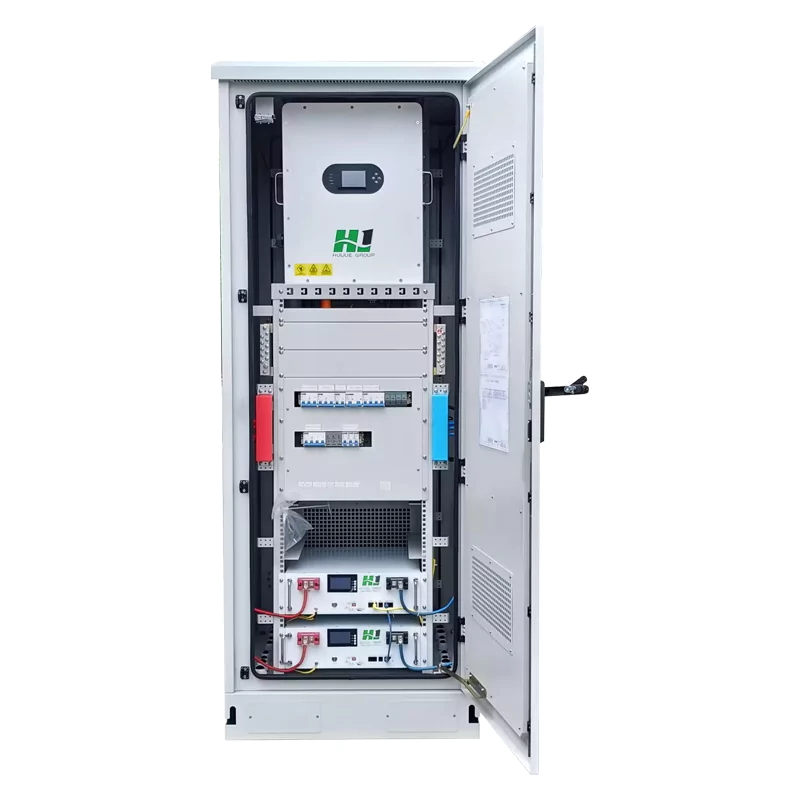
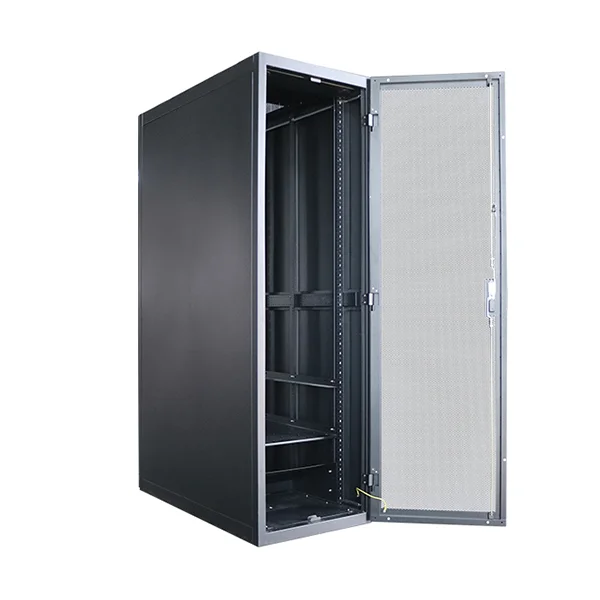
The server rack is a standard frame (usually 42U) which used to install servers and network equipment. As for the IT cost, the rack itself is the least costly component. Much of the spending is for what the rack takes in, not what the rack is.
A Custom-Built Server Rack will normally consist of:
- Physical rack enclosure, shelves or rails, and mounting hardware
- Servers, storage, and network switches
- Power distribution units (PDUs) and redundancy
- Cooling and airflow control
- Floor space, cabling and installation labour
- Recurring energy and maintenance costs
Ignoring any one of these tends to underestimate total cost.
Core cost components of a server rack
Rack enclosure and physical infrastructure
The metal rack, rails, cable managers and basic accessories are a pittance at most. In many installations, they account for a very tiny portion of the overall IT cost. Compatibility, weight limits, and airflow patterns and not overall budget size are the factors that are mainly influenced by the enclosure.
Servers, storage and networking hardware
This is where prices start to scale. An underutilized rack, containing a handful of purposes servers, can be quite cheap. A rack full of high-density compute, massive storage matrices, or specialized accelerators can cost many times more.
The main variables are:
- Number of servers per rack
- CPU, memory and storage per server
- Networking speed and redundancy requirements
High-density racks drive the cost not only higher for the hardware, but also for power and cooling purposes.
Power delivery and consumption
Power is one of the most underestimated cost factors. Every rack needs reliable electricity, usually redundant to avoid downtime. PDUs, backup power paths, and integration with facility-level systems, all contribute to capital cost.
More importantly, power consumption drives long-term operating expense. The U.S. Department of Energy’s publication Best Practices Guide for Energy-Efficient Data Center Design shows that rack-level power density has increased steadily, making energy efficiency and power planning central to overall IT cost management.
Cooling and thermal management
Higher rack densities make cooling both more challenging and more costly. Traditional room cooling may be adequate for low-density racks, but high-density configurations typically require focused airflow management, containment, or ancillary cooling systems.
Cooling charges are closely related to energy consumption. Every watt consumed by servers turns into heat that needs to be taken out. Essentially this means energy charges are doubled: once computing and once cooling.
Space, cabling, and deployment labor
The physical rack space in a data center or colocation facility has an actual cost. Even in on-premises environments, rack space is at a premium and needs to be supported with the appropriate infrastructure, fire suppression, security, and so on.
Cabling, installation, and first-time configuration are all notorious line items that get forgotten. While each is small on its own, collectively they can add up to a big chunk of the cost of building out.
Typical server rack cost ranges
Since the configurations are so different, it is better to think in terms of ranges rather than single numbers. The following table shows how costs can scale up and down based on rack density and application.
| Rack Type | Typical Use Case | Approximate IT Cost Range |
| Low-density rack | File servers, light workloads | $10,000 – $30,000 |
| Mid-density rack | Virtualization, mixed workloads | $30,000 – $80,000 |
| High-density rack | Compute-intensive or AI workloads | $80,000 – $150,000+ |
These figures reflect IT-side costs only and do not include broader facility construction or long-term staffing expenses.
Macro trends that influence rack costs
Server rack costs do not exist in isolation. They reflect larger trends in data infrastructure investment. The World Bank’s publication Advancing Cloud and Data Infrastructure Markets shows that global spending on data infrastructure continues to rise, driven by cloud adoption, digital services, and higher performance expectations. This macro pressure pushes organizations toward denser racks, which in turn raises per-rack costs even as efficiency improves.
At the same time, consolidation efforts aim to reduce the total number of racks by increasing utilization, shifting the cost discussion from “how many racks” to “how powerful each rack should be.”
Case study: a government-style consolidation rack
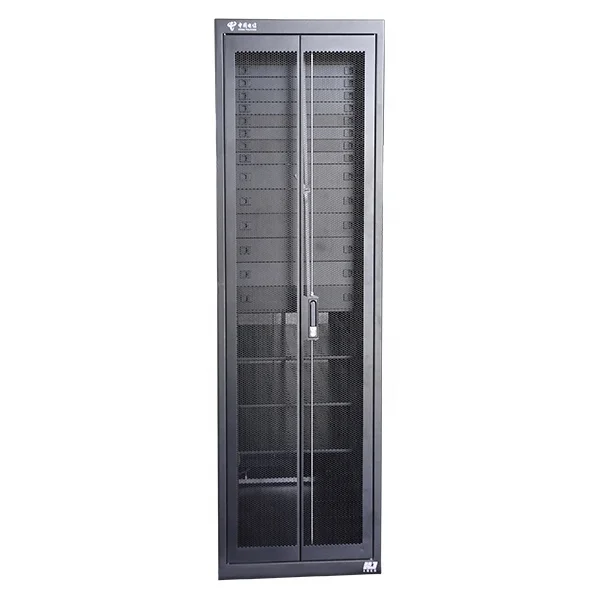
A useful illustration comes from large public-sector IT environments. The Congressional Research Service’s publication Department of Defense Implementation of the Federal Data Center Consolidation Initiative shows how consolidation strategies focus on fewer, more capable racks rather than many lightly used ones.
In particular, this means:
- Decommissioning unnecessary racks
- Spending more per rack on higher-capacity servers
- More power and cooling per rack, fewer racks overall
The consequence is often a higher initial cost per server rack, balanced by lower overall operational complexity and improved utilization. For IT planners, this case is a lesson in why the cost of the rack must be viewed in context, and not as a standalone line item.
How to calculate the cost of your server rack
A working estimation procedure can be broken into three parts.
First, Set the workload. Compute intensity, storage, and network requirements will dictate how dense the rack can be.
Second, Determine Power and Cooling by the Workload. This process frequently exposes hidden costs, particularly in auto environments unsuited to high-density racks.
Third, Separate One-Time Construction Costs From Recurring Operations Costs. The energy, cooling and maintenance over three to five years can be as much or more than the upfront?gone hardware investment.
Common mistakes to avoid
One common error is to price only the servers and not the infrastructure. Another is to assume that an affordable operation can be had for a rack that fits physically. The real limits are often power and cooling availability.
And a final mistake is to consider all racks interchangeable. In practice, a light duty workload rack and a high-density computing rack are, from a cost standpoint, completely different beasts.
Final thoughts
So, what do you need to pay to build a server rack? The truthful answer is it’s less about the rack itself and more about what you ask it to do. Hardware configuration, power density, cooling method, and long term energy efficiency goals influence the final number.
For anyone getting ready to roll out a deployment, the most actionable next step is to correlate workloads to power and cooling demands prior to hardware selection. That one exercise tends to eliminate the biggest budgetary surprises and the most sustainable IT investments over time.